Cawdor Castle and Macbeth in Shakespeare
Cawdor Castle’s link with Macbeth is literary: in Shakespeare’s play, Macbeth receives the title Thane of Cawdor. The present tower house was built long after the historical Macbeth lived. The castle was neither his residence nor the setting for Duncan’s murder in the play. Bring the title with you as a point of reference, then look for the evidence of a different story in the stonework and the rooms.
The tower house, the holly and the right to fortify
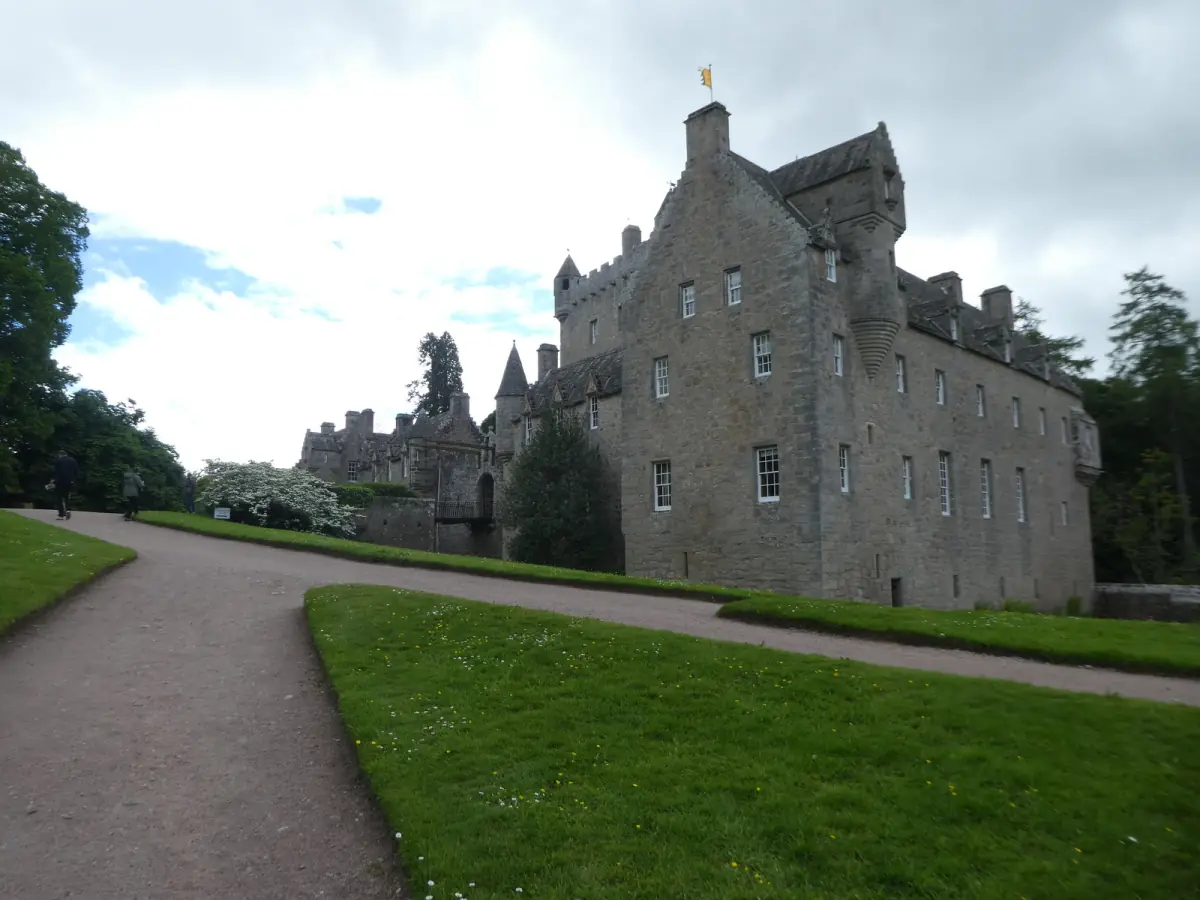
Cawdor Castle grew around a tower house dating to the late 14th century, with wings added later. The surviving trunk in the tower is holly. Radiocarbon dating puts the wood at around 1372. The date of the wood is separate from the date of the building. In 1454 William, the sixth Thane of Cawdor, received permission to fortify the castle. That permission is a later point in the history of the fortified family home.
A Cawdor visit from port
This minibus trip includes a Cawdor stop and a driver-guide; attraction entry is extra.
Hand-picked tours, booked through GetYourGuide. Prices are indicative starting prices in British pounds (as of November 2026). Tap a tour for live availability and the current price in your currency.

A Cawdor Castle stop on a trip from Invergordon
This port excursion visits Cawdor with a driver-guide and carries up to 14 passengers. Attraction admission is paid separately.
Earlier sites and the Campbell connection
Cawdor Castle occupies a different site from both the fortification of 1179 by a ford on the River Nairn and the residence at Old Calder, where a repair was recorded in 1398. The fortification by the ford has disappeared. Keep the sites distinct when reading the dates: a record about Old Calder belongs to the earlier residence, while the tower house and its later wings are the buildings on the present site.
In 1510 the Calder heiress Muriel married Sir John Campbell, marking the transition to Campbell administration. Today Cawdor Castle remains a family home. The visitor route passes through the principal rooms, where the furniture, art and tapestries offer a way to look at the castle as a place to live. See admission and the indoor route for planning details.

The legend of the donkey and the holly tree
Cawdor Castle has a founding legend in which a donkey laden with gold chose the site by stopping to rest. The story gives the tree a place in the origin of the castle. On a visit, treat the donkey’s resting place as part of the tale and the surviving trunk as the piece of wood that can be dated. The tree and the tower are a good starting point for seeing how a real feature of a building can become part of a local story.
For a closer look at the building, start with the profile of the tower and then trace how the wings extend away from it.
Continue the visit in the Cawdor Castle gardens to look back at the tower and its later wings from outside. For a visit on a cruise itinerary, see excursions from Invergordon and Inverness.
Questions about Cawdor Castle’s history
Did Macbeth live at Cawdor Castle?
No. The tower house at Cawdor Castle dates from the late 14th century, long after the historical Macbeth lived. The association comes from the title Thane of Cawdor, which Shakespeare gives Macbeth in the play. The castle visit tells the story of the later family home.
What does the date of the holly trunk tell us?
The surviving holly in Cawdor Castle’s tower has been dated to around 1372 by radiocarbon analysis. That dates the wood. The tower house belongs to the late 14th century, and William’s permission to fortify came in 1454. Each date describes a different part of the castle’s history.
How many people join the minibus excursion from Invergordon?
Up to 14 passengers can join the minibus excursion to Cawdor Castle from Invergordon. The trip includes a driver-guide and pickup and drop-off at the port. Admission to attractions is separate. Budget for the castle ticket if the indoor route is part of the plan.